
AI Editing for Real Estate Photography: Which Program Is Right for You?
📸 Why AI Editing Matters in Real Estate Photography
AI editing has become a core part of modern real estate photography workflows. Faster turnaround times, consistent results, and scalable editing solutions are no longer optional—they’re expected.
But not all AI editing tools are created equal. Some prioritize realism, others focus on speed or stylistic consistency. With new disclosure laws and MLS scrutiny approaching in 2026, choosing the right AI editor matters more than ever.
🏠 AutoHDR: Built Specifically for Real Estate
✨ What AutoHDR Does Best
AutoHDR is designed specifically for real estate photography. It focuses on natural HDR blending, clean window pulls, and realistic interior/exterior balance.
✅ Pros
Purpose-built for real estate
Excellent HDR blending
Reliable window exposures
Fast turnaround
Minimal setup required
❌ Cons
Limited creative customization
Not ideal for non-real-estate work
🎯 Best For
Photographers who want consistent, MLS-safe, realistic edits with minimal effort.
📺Professional Testimonial Video Link: https://www.youtube.com/watch?v=2_xdkitECLo&t=642s
🧠 Imagen: AI Trained to Your Editing Style
✨ What Imagen Does Best
Imagen uses AI profiles trained on your past edits, allowing it to replicate your personal editing style across large batches of photos.
✅ Pros
Custom AI profile trained to your style
Strong consistency once trained
Lightroom integration
Scales well for high-volume shooters
❌ Cons
Requires training time
Less “plug-and-play”
Multi-program use. “Must have Lightroom Classic, CC, Adobe Camera Raw to use.
🎯 Best For
Photographers focused on brand consistency and large shoot volumes.
📺Professional Testimonial Video Link: https://www.youtube.com/watch?v=FlkTlyCGkE4
⚡ Fotello: Speed-Focused AI with Simplicity
✨ What Fotello Does Best
Fotello emphasizes speed and simplicity, offering automated edits with minimal user input.
✅ Pros
Extremely fast turnaround
Simple interface
Budget-friendly subscription
❌ Cons
Limited control over final look
Results can feel generic
Requires careful review for accuracy
🎯 Best For
Photographers prioritizing speed over precision.
Professional Testimonial Video Link: https://www.youtube.com/watch?v=HFMtueRrTTw&t=52s
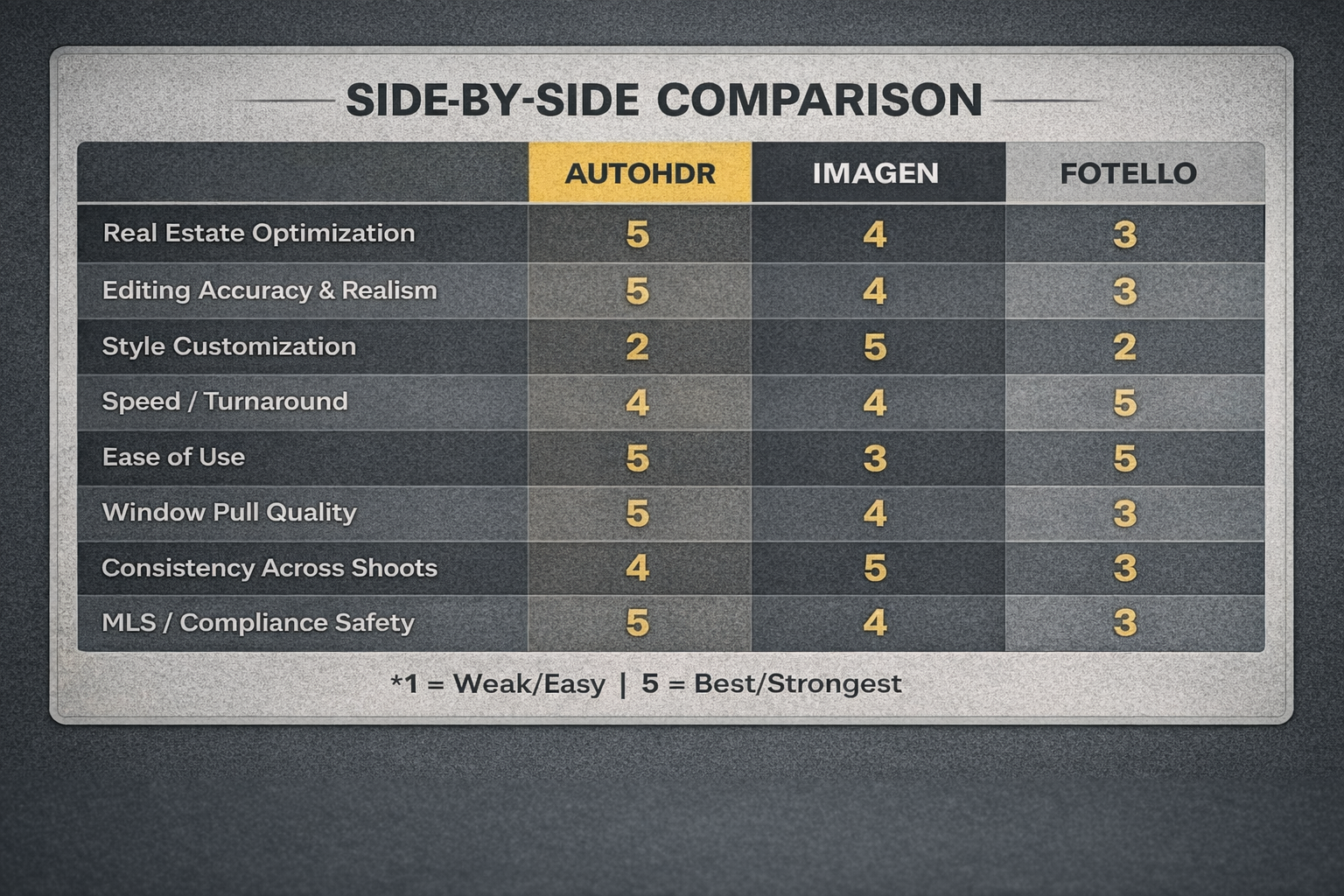
📊 Side-by-Side Comparison (1–5 Scale)
💰 Pricing Comparison (Typical 2025 Models)
💵 AutoHDR
Pay-per-image
~$1.50–$2.00 per photo
No subscription
Best for: Predictable per-shoot costs
💵 Imagen
~$67/month subscription
~$0.05–$0.10 per image
Best for: High-volume shooters who want brand consistency
💵 Fotello
~$20–$40/month subscription
Unlimited images (plan dependent)
Best for: Budget-conscious, speed-driven workflows
🗣 What Real Users Are Saying
AutoHDR
Positive: Reliable, realistic, great window pulls
Negative: Limited creative flexibility
Overall: Safe, professional, consistent
Imagen
Positive: Matches personal editing style, powerful once trained
Negative: Training phase takes time, monthly cost
Overall: Excellent for branding-focused photographers
Fotello
Positive: Fast, simple, affordable
Negative: Can feel generic, less precision
Overall: Convenient but requires oversight
✍️ My Personal Take: AutoHDR
AutoHDR stands out for its consistency and realism. I appreciate that it doesn’t push edits too far—it delivers clean results that feel MLS-safe. For real estate photography, especially heading into 2026, that reliability is critical.
Where it fits my workflow:
High-volume real estate shoots
Listings requiring fast, accurate delivery
Clients who value realism over stylization
✍️ My Personal Take: Imagen
Imagen feels more like a long-term investment. Once trained properly, it does an impressive job maintaining a consistent editing style. It’s best suited for photographers who shoot frequently and want their edits to feel cohesive across seasons and lighting conditions. The application has a desktop version and a mobile version and updates very frequently.
Imagen also uses “Profile Showcases” which are pre-built profiles ranging from various color schemes and editing styles. They also state what profile fits with what best.
Where it fits my workflow:
Brand-driven editing
Large image batches
Long-term consistency goals
✍️ My Personal Take: Fotello
Fotello excels in speed and simplicity. It’s a solid option when turnaround time is the top priority, though I still prefer reviewing images closely to ensure accuracy. It’s a useful tool, but not one I’d rely on blindly.
Where it fits my workflow:
Rush listings
Smaller jobs
Situations where speed outweighs precision
⚠️ AI Editing & 2026 Compliance Considerations
With new laws like California AB 723, realistic editing is more important than ever. Over-editing, virtual alterations, or AI-driven object changes may require disclosure.
No matter which tool you use:
Always archive original images
Avoid edits that misrepresent the property
Review AI results carefully
🏁 Final Verdict & My Reality of it All
🥇 Best Overall for Real Estate Accuracy: AutoHDR
🥈 Best for Brand Consistency: Imagen
🥉 Best for Speed & Simplicity: Fotello
The “best” AI editor depends on your workflow, volume, and tolerance for risk. The key is choosing a tool that supports accuracy, efficiency, and transparency.
My final verdict is this: We don’t always get perfect homes to shoot, and the conditions aren’t always ideal, but we adapt and deliver quality results by utilizing background edits through Lightroom, Capture One, or Photoshop. Each of these editing programs serves its purpose effectively, but choosing the right one depends on the workload you typically handle each month. Since these programs operate on subscription-based models, it’s important to consider how they align with your needs—whether that’s the number of listings or photos you edit. For instance, if the average house you shoot involves 30 to 40 photos per listing, you’ll need to factor that into your subscription plan and evaluate whether the investment is worth the return.
